How to Choose the Right GPS for Surveying? A Practical Guide for Engineers
May 15, 2026

If you have ever tried selecting a GPS for surveying, you already know it’s not as simple as it sounds. There are too many terms floating around: GNSS, DGPS, RTK, and each one claims better accuracy than the other. At the same time, budgets, timelines, and field conditions don’t always cooperate.
So the real question becomes: What do you actually need for your work?
Whether you’re working on railway alignment, infrastructure projects, or site surveys, the GPS you choose will directly affect how efficiently you work and how reliable your data is.
This guide is meant to simplify things.
GPS vs GNSS: What’s the Difference and Does It Matter?
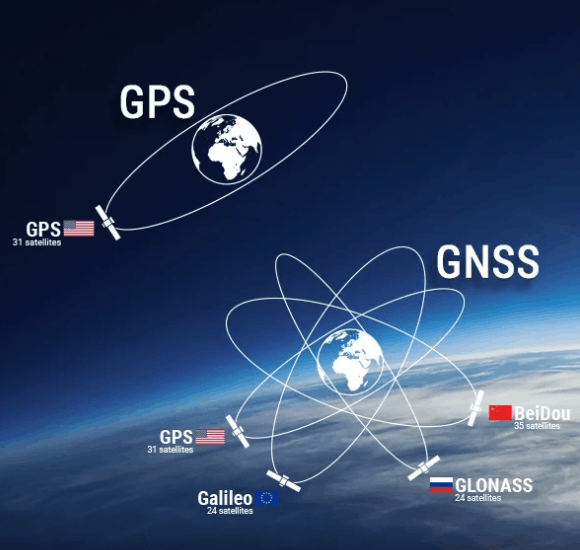
Most people use the term GPS for everything, and that’s completely fine in day-to-day conversations. But technically, GPS is just one system. It’s part of a larger group called GNSS (Global Navigation Satellite Systems), which includes multiple satellite networks like those from the US, Russia, Europe, and China.
Why does this matter to you?
Because modern survey equipment doesn’t rely on just one system anymore. It connects to multiple satellite constellations, which means:
- Better accuracy
- More reliable signals
- Improved performance in difficult environments
In simple terms: more satellites = better results in the field.
Different Ways GPS Actually Works in Surveying
Let’s break this down in a way that reflects what happens on-site, not in textbooks.
1. Autonomous GPS (Basic, Standalone)
This is the simplest form:
- One receiver
- No corrections
- Accuracy of around 3 to 10 meters
It works fine for general navigation, but for surveying work? It falls short quickly.
You might think you’re within a few meters, but in reality, errors can go much higher, especially near buildings or under trees.
2. Differential GPS (DGPS)
This is where things start getting more serious.
DGPS uses a reference point (base station) whose location is already known. It then corrects the errors in your rover’s position.
What you get:
- Much better accuracy than a standalone GPS
- Flexibility to work in real-time or process data later
- Very high accuracy after post-processing
In practice, this is useful for:
- Mapping
- GIS work
- Applications where sub-meter accuracy is enough
- Static Surveys ( such as in Road Construction )
3. RTK GPS (High-Precision Work)
This is what most professional surveying applications rely on today.
RTK uses a base and a rover working together in real time to give:
- Centimeter-level accuracy
- Instant results in the field
This is what you need when:
- You’re doing railway or road alignment
- Setting out construction points
- Establishing precise control
The trade-off? It requires proper setup and trained operators but the productivity gain is significant.
Accuracy vs Cost: The Trade-Off Everyone Faces
One of the most common mistakes is choosing equipment based only on price.
In reality, GPS systems fall into broad categories:
- Basic navigation devices → low cost, low accuracy
- Mapping-grade → moderate accuracy
- Sub-meter → better precision
- Survey-grade → highest accuracy (centimeter level)
Here’s the practical truth: The more accuracy you need, the more you’ll invest not just in equipment, but also in training and workflow.
So instead of asking “What’s the best GPS?”, ask: “What level of accuracy does my project actually require?”
Real-Time vs Post-Processing: Which One Fits Your Workflow?
This is less about technology and more about how you prefer to work.
Real-Time (RTK / Real-Time DGPS)
- You get results instantly
- Ideal for layout and on-site decisions
- Depends on signal quality and connectivity
Post-Processed
- Data is cleaned and refined later
- More control over accuracy
- Useful for long-distance measurements
In simple terms:
- Need speed? → Go real-time
- Need flexibility and deeper accuracy control? → Post-process
So, Which GPS Should You Choose?
Instead of overcomplicating it, think in terms of your actual work:
- If you’re doing basic mapping or GIS, sub-meter GPS is usually enough
- If you’re working on railways, construction, or infrastructure, you need RTK
- If you’re establishing control points across distances, static GPS methods make more sense
There’s no one-size-fits-all solution and that’s where many buying decisions go wrong.
The Reality of Working with GPS in the Field
Even the best systems have limitations. And ignoring them can cost time and accuracy.
Some common challenges:
- Trees and buildings are blocking the signals
- Reduced accuracy in vertical measurements
- Signal interruptions in tough environments
- Need for trained operators (especially for survey-grade systems)
Understanding these early helps avoid unrealistic expectations.
Should You Start Using GPS?
For most surveying teams today, the answer is yes but with the right expectations.
GPS can:
- Save significant field time
- Reduce dependency on line-of-sight methods
- Improve overall productivity
But it only works well when:
- The equipment matches your application
- The team understands how to use it properly
Even starting with a basic survey-grade setup can make a noticeable difference in how quickly you establish control and collect data.
Conclusion
Choosing a GPS isn’t about going for the most advanced option available. It’s about choosing what actually fits your work.
Every level of GPS, from mapping to high-precision RTK, has its place. The key is understanding where each one adds value.
At Paragon Instrumentation Engineers Pvt. Ltd., we work closely with engineering teams to simplify this decision, helping you select solutions that perform reliably in real field conditions, not just on paper.